Bridging the gap between what we know works and what we actually do — studying how to effectively translate evidence into practice and policy in real‑world settings.
We don't just generate knowledge. We make it work for communities, health workers, and decision‑makers across Kenya.
Implementation research is the scientific study of methods to promote the systematic uptake of research findings and other evidence‑based practices into routine use. It seeks to understand what works, for whom, and under what conditions — and why interventions succeed or fail in real‑world contexts.
At Utafiti Wellness, we use implementation research to design, test, and scale up interventions that are practical, sustainable, and relevant to the Kenyan health system and the communities we serve.
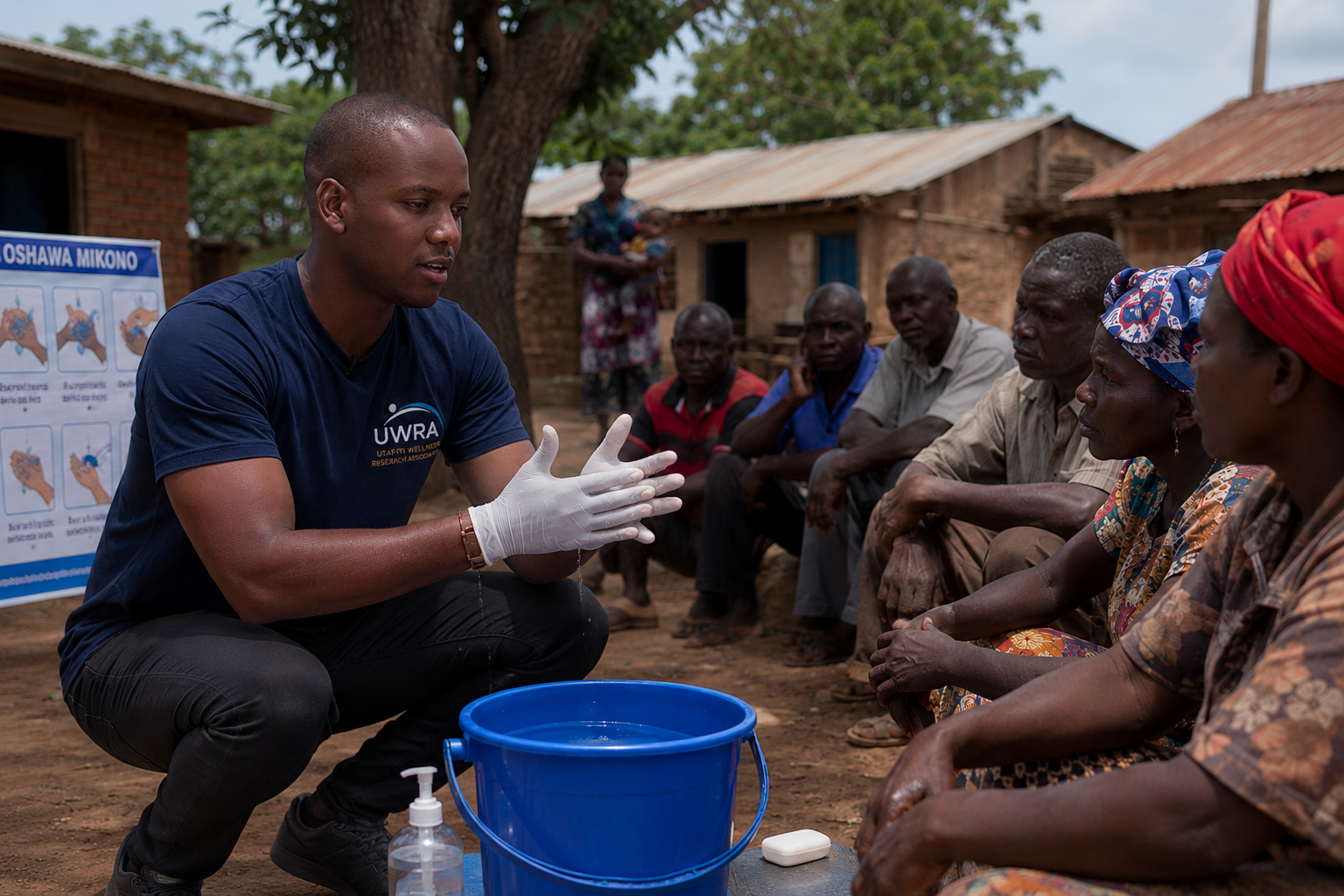
UWRA Research team delivering a WASH (Water, Sanitation, and Hygiene) lesson to households in Bungoma County, Kenya. Implementation research helps us understand what teaching methods and messages are most effective in improving hygiene practices.
We follow a structured, evidence‑based approach that involves stakeholders at every stage — from identifying problems to scaling solutions.
Pinpoint the evidence‑practice gap and define the problem with stakeholders.
Analyse barriers and enablers using implementation science frameworks.
Co‑create interventions and test them in real‑world settings.
Iteratively improve based on feedback and emerging evidence.
Expand successful interventions while building local capacity for sustainability.
We use rigorous, participatory methods that involve stakeholders from the outset — ensuring our findings are actionable, relevant, and grounded in local reality.
We involve policymakers, health workers, community members, and other stakeholders from the very beginning. Together, we define problems, co‑design interventions, and agree on measures of success. This ensures ownership, relevance, and real‑world applicability.
We combine quantitative data (surveys, routine data, clinical outcomes) with qualitative insights (interviews, focus groups, observations) to understand not just what happened, but why and how — including the contextual factors that influence success.
We use adaptive, iterative designs — such as plan‑do‑study‑act (PDSA) cycles and formative evaluations — to test and refine interventions in real time. We learn, adjust, and improve continuously.
We tailor evidence‑based interventions to fit local cultural, structural, and resource realities. We balance fidelity to the core components of an intervention with the flexibility needed to make it work in different settings.
We track how closely interventions are delivered as intended, while systematically documenting adaptations. This helps us understand what works, for whom, and under what conditions — and how to scale effectively.
We train local teams — including health workers, researchers, and community leaders — in implementation science methods. This builds lasting capacity to lead, adapt, and sustain improvements long after our engagement ends.
Here are some of the ways we've applied implementation research to solve real‑world health challenges. Each project is designed to generate actionable knowledge that can be scaled and sustained.
We are studying how to integrate screening and management of hypertension and diabetes into routine primary care in two Kenyan counties. Through iterative cycles, we are identifying training gaps, supply chain issues, and patient engagement strategies to improve detection, treatment, and follow‑up.
We are testing a mobile‑based referral and tracking system for high‑risk pregnancies. Implementation research is helping us understand which features work best, why, and how to improve usability for midwives working in busy clinics with limited resources.
We are working with community health promoters to implement a simple point‑of‑care algorithm for appropriate antibiotic use in children under ten. We are evaluating the implementation process, barriers, and facilitators to scale‑up across multiple villages in two counties.
Understanding the building blocks of implementation science helps us design better interventions.
These core concepts guide our work and help us systematically translate evidence into practice.
Without implementation research, even the most powerful evidence remains unused. We help ensure that research investments translate into real, measurable changes in health and wellbeing for communities across Kenya.
We welcome partnerships with governments, universities, NGOs, donors, and community organizations. Together, we can design and implement research that translates into real‑world impact.
From design to dissemination — we collaborate with partners to turn evidence into action.